
ai automation companies: platforms, agencies, or consultants
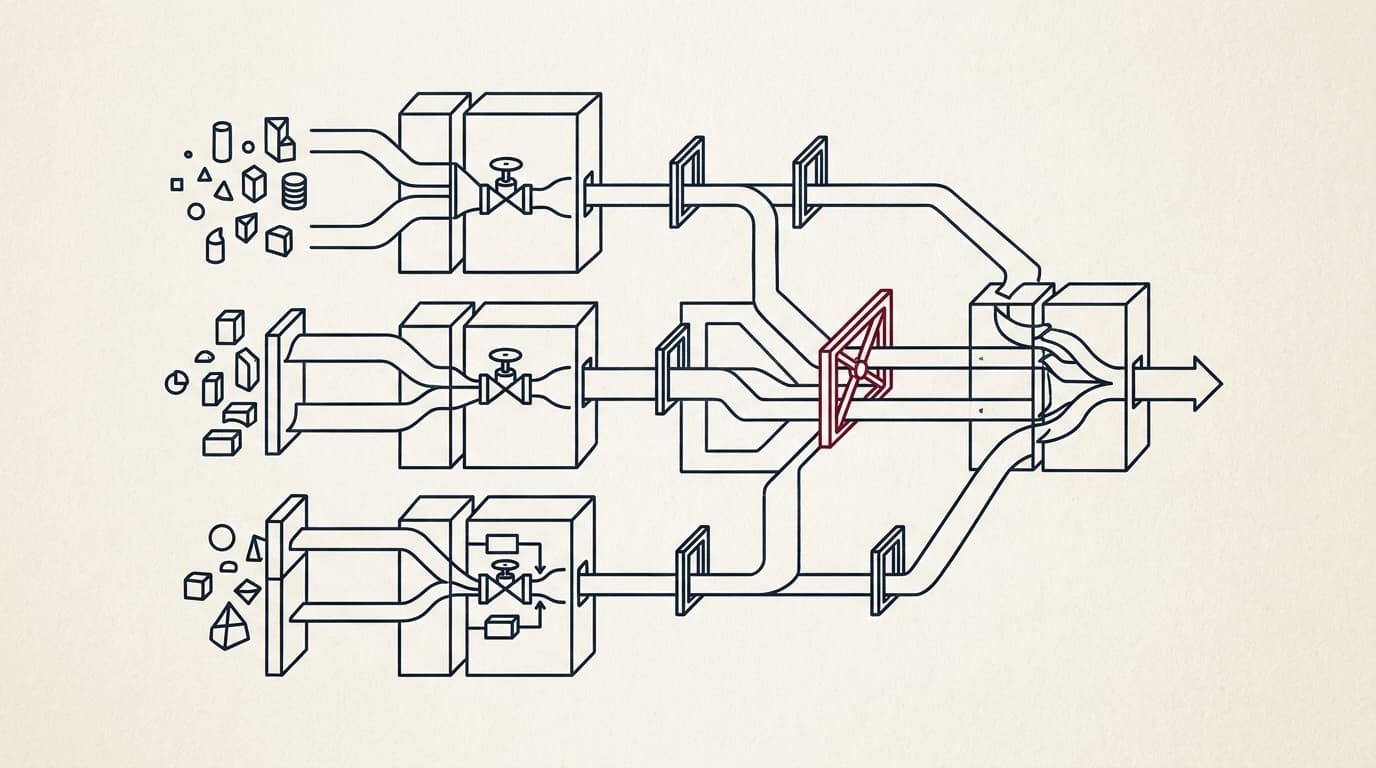
three things decide whether you need a platform, an agency, or an engineering partner. who owns the code when they leave. whether the logic can be audited line by line. and what happens when the model hallucinates. most firms shopping for "ai automation" never ask these questions. they ask about price and turnaround, pick whichever vendor demos best, and find out what they actually bought eight months in, usually during an incident.
the category called ai automation companies is really three different businesses wearing the same marketing language. a software platform. a generic agency. a firm that builds custom architecture. they are not substitutes for each other. picking the wrong one does not just cost money, it determines whether you can explain a decision to a bar regulator or a client's lawyer.
the three ways firms buy automation
most buying decisions get framed as platform versus agency, pick the cheaper or faster one. that framing is already wrong, because it assumes the three options are competing for the same job.
a platform, think zapier, make, or a vertical point-solution, sells you a set of building blocks and a UI to connect them. you assemble the automation yourself, or a consultant assembles it for you inside their tool. an agency sells you outcomes: content, lead routing, intake triage, usually wrapped around a handful of ai prompts and someone else's subscription. a custom build sells you infrastructure: code that lives in your cloud accounts, logic you can read, and a team that designed the system around your specific regulatory exposure.
the honest question is not which one is best. it is which job you are actually trying to do. routing internal slack notifications is not the same job as deciding which ad spend gets cut off before it pays for a competitor's law firm.
the criteria that actually matter in regulated operations
four things separate a system you can defend from one you can only hope works.
- tenant isolation. does the automation run inside your own cloud accounts, or inside the vendor's? if it is theirs, leaving is a negotiation, not a handover.
- deterministic logic separated from extraction. does a model read and classify, while a separate piece of code, one no model touches, make the actual decision? if the model is deciding, you cannot audit the decision, you can only ask it to explain itself after the fact, which is not the same thing.
- human-gated staging. can a proposed change sit in a dry run, visible and reversible, before it touches anything live? or does the system act the moment it decides it should?
- fail-safe degradation. when the model is unavailable or uncertain, does the work stop and wait for a human, or does something guess and keep moving?
most vendor conversations never reach these four questions. they get answered anyway, just later, usually after something has already gone wrong.
platforms: fast to start, lethal to audit
no-code platforms are genuinely good at what they are built for. you can wire up a notification flow or sync two calendars in an afternoon, no engineering required. the cost is low, the time to first result is short, and for low-stakes internal work that is a fair trade.
the trouble starts when platform logic gets stretched to cover something that needs to be audited later. automations built from chained webhooks and proprietary nodes do not leave a trail that holds up to scrutiny. the logic is scattered across a dozen small steps inside someone else's product, and if a regulator or opposing counsel asks "why did this happen," the honest answer is often "here is a screenshot of a flowchart." that is not a record, it is a diagram.
platforms also tend to leak context they were never meant to carry. a webhook payload built for a marketing automation was not designed with client-matter confidentiality in mind, and it shows the first time someone asks where the data actually sits.
agencies: prompt wrappers masquerading as engineering
generic ai agencies sell outcomes, which sounds like exactly what a busy practice wants. the reality is usually a handful of prompts chained together, running on a subscription the agency owns, dressed up as a bespoke solution.
the prompts work fine on the examples in the sales deck. they get brittle fast on the edge cases that actually matter: the search query that is almost a competitor name but not quite, the intake form answer that is ambiguous in a way the demo never covered. when that happens, the fix is another round of prompt tweaking, billed by the hour, and the firm never owns the logic that was supposedly built for them.
because the infrastructure sits in the agency's accounts, ending the relationship means losing the automation, not inheriting it. that is the hostage dynamic buyers describe after the fact and rarely anticipate going in.
there is nothing wrong with an agency for work that tolerates being wrong sometimes: drafting marketing copy, generating first-pass content for review. the problem is agencies selling that same approach into work where a wrong call has a dollar or compliance cost attached.
architectural engineering: staging, conflict checks, and deterministic gates
the third path looks different in practice. take a pattern from ad spend control for a regulated practice: a firm paying for search clicks where some of those clicks come from people searching a competitor's name, or searching for a different kind of lawyer entirely. neither failure throws an error. the campaign runs, the budget drains, and the only evidence is a long report nobody has time to read line by line.
the fix was not a smarter model making smarter decisions. it was a weekly pipeline: a model reads the search terms and sorts them into buckets, competitor names, off-target intent, real prospects. that classification goes nowhere near production. it becomes a staged list of proposed negative keywords, and before anything is approved, a deterministic check compares every proposed negative against every live keyword, so a negative can never silently block a real prospect's search. nothing commits until a human runs it with an explicit approval step. a scheduled card shows what changed and what is waiting for review, so the check cannot quietly stop happening.
the model never decides. it reads and routes. the decision, apply or reject, sits in code that is the same every time it runs, which is exactly what makes it auditable after the fact. that split, extraction by model, decision by deterministic logic, is the actual engineering, not a nicer-sounding prompt.
[[FIGURE:1]]
who should buy what
match the tool to the stakes, not to the sales pitch.
- internal, low-risk, reversible tasks: a platform is the right call. notification routing, calendar sync, internal dashboards. nobody needs to audit a slack notification.
- content volume with human review before anything ships: an agency can work, as long as a person signs off before it touches a client or a regulator.
- anything client-facing, regulated, or tied to money leaving the building: this is where off-the-shelf platforms and generic agencies both run out of road. ad spend decisions, intake triage, document routing for licensed work, these need a deterministic decision layer, a dry-run stage, and infrastructure that lives in accounts you control, not a vendor's.
the test is simple. if you would need to explain a specific decision to a regulator, a client, or opposing counsel six months from now, you need a system built to be read, not a black box you are trusting to behave.
the way to find out which category your own workflows fall into is to look at them one at a time, not in the abstract. the Workflow Audit is a two-week, fixed-scope look at where your current automation sits against these four criteria, and it is credited toward a build if you move forward. it costs 2,500 dollars and it tells you, specifically, whether what you have is a platform problem, an agency problem, or something that needs to be built properly from the start.