
google local services ads for lawyers: what 17 leads taught one injury firm
google local services ads get sold to law firms on one line: you only pay for leads. that's true. but nobody defines "lead" for you, and that's where the money goes.
i run search and local services ads for a personal injury firm. here's its local services account, read straight from the google ads api on november 18, 2026:
- 17 leads, all time. 14 were charged.
- 9 came in under the personal injury category. 6 were charged. google's own job tags put 7 of them as medical malpractice.
- 8 came in under the generic "lawyer" categories: 5 litigation calls and 3 traffic calls. all 8 were charged.
- since september 22: $0 spent, 59 impressions, no new leads.
so the honest summary is: the firm paid for 14 leads, and 8 of them weren't injury cases at all. part of that is google's design. part of it was my setup, and that's the useful part.
what i got wrong, in order
1. bidding on the generic category. local services lets a firm show for broad "lawyer" searches as well as its practice area. it sounds like free reach. on this account it produced 8 leads, every one charged, and not one was an injury case. google also says it no longer gives credits for "job type not serviced" or "geo not serviced" leads. so a traffic ticket call to an injury firm is a charge you keep. i turned the generic category off on october 26, after checking that no injury lead had ever come through it.
2. serving hours that didn't match answered hours. the firm's phones went to a 24/7 answering service in mid-september. the ads kept serving monday to friday, 8 to 5, for two more weeks, because nobody widened the schedule. when i did widen it, a test call reached the office auto-attendant, not the answering service. the forward hadn't actually been proven. so i reverted, and only set 24/7 again once a test call actually reached the answering service.
that sounds fussy. here's why it isn't. google charges a missed call when it comes in during your listed business hours and the caller stays on the line more than 20 seconds. and google's ranking page says missed calls can hurt your responsiveness, which is one of the things it ranks on. listing hours you don't actually answer means paying for calls nobody took, and ranking lower for it.
3. treating the dashboard count as the result. "17 leads" reads fine on a report. it only means something once each one is matched to a job type and a charge. until we pulled lead by lead, nobody had noticed that the injury category was mostly medical malpractice.
what actually decides who shows up
google lists the ranking inputs plainly: your bid, how likely you are to get the lead, and profile quality. profile quality means rating, number of reviews, response time, photos and the verification checks you've completed. there's nothing secret on that list. most of it is intake, not marketing. answer the phone fast, during the hours you list, and ask happy clients for reviews.
that's the contrarian part: for an injury firm, local services is less an ad channel than a phone line google charges you to answer. it rewards a firm with tight intake and punishes one without it. more budget doesn't fix a missed call.
what i'd set up before the first dollar
- only the categories you take. start with your practice area alone. add a broad category only if a month of charged leads shows it brings your case type.
- hours you can prove. list only the hours a person answers. prove them with a test call from an outside number before you widen anything.
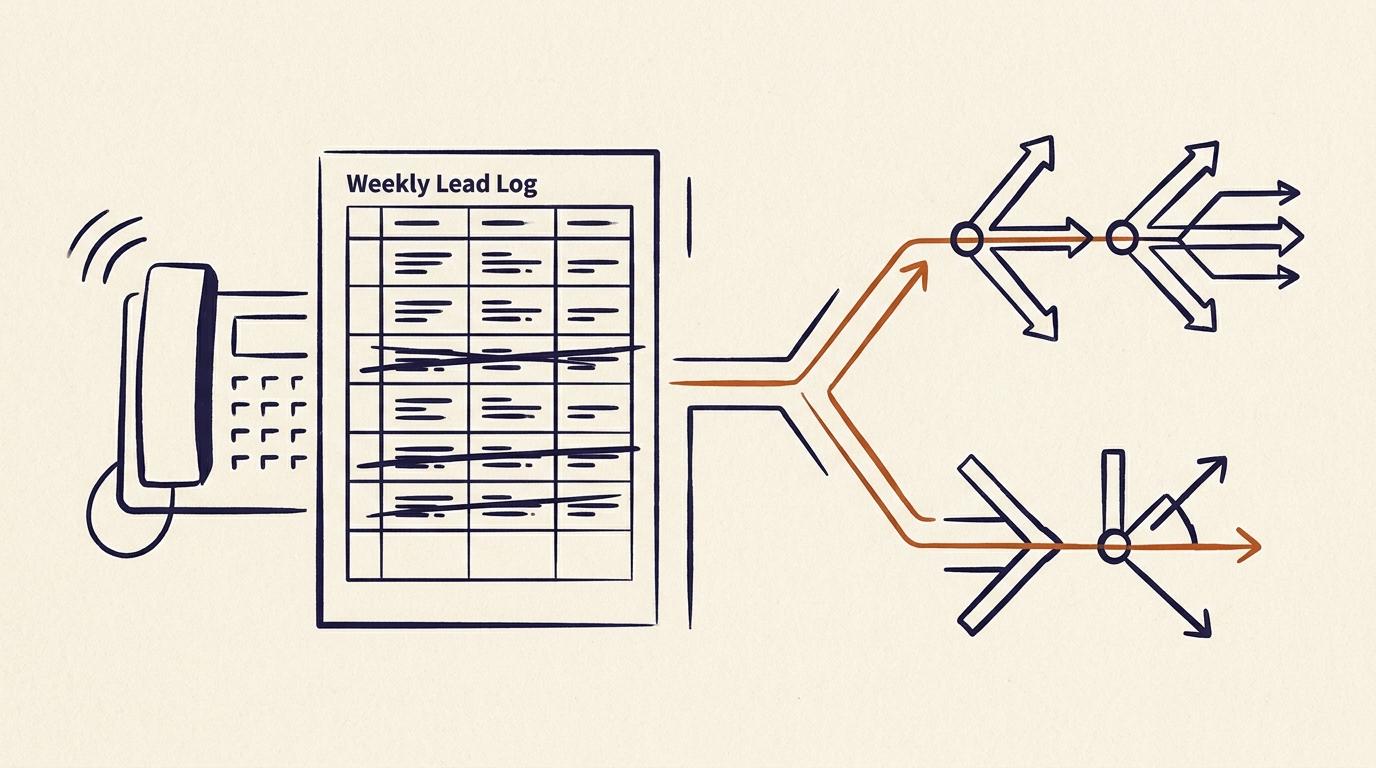
- a weekly lead read, by job type and charge. every charged lead, with what it actually was. that's the only way to see a category drifting.
- disputes the same week. credits still exist for leads google agrees were invalid, and most land within 30 days. but you have to look to find them.
- reviews as an intake step. a short, honest ask at the end of a good call, logged, so it happens every time and not when someone remembers.
- one number for the whole thing: charged leads that were your case type, divided by spend. not impressions, not "leads".
none of this needs new software. most firms already have the pieces: the answering service, the ads account, a spreadsheet. what's missing is the weekly check that connects them.
what this means if you're about to turn it on
local services ads can work for injury firms. the badge and the placement are real. but the account only sends you what your setup lets it send. if your categories are wide and your hours are wishful, you'll get a lead count that looks fine and a case count that doesn't.
if you already run local services for a firm: which job type eats most of your charged leads? i'd like to compare notes.
and if you want someone to trace where your intake actually leaks, from the ad to the person who picks up, that's what the Workflow Audit is for. two weeks, $2,500 fixed, credited in full toward a build.