
hipaa compliant automation for the back office, not the exam room
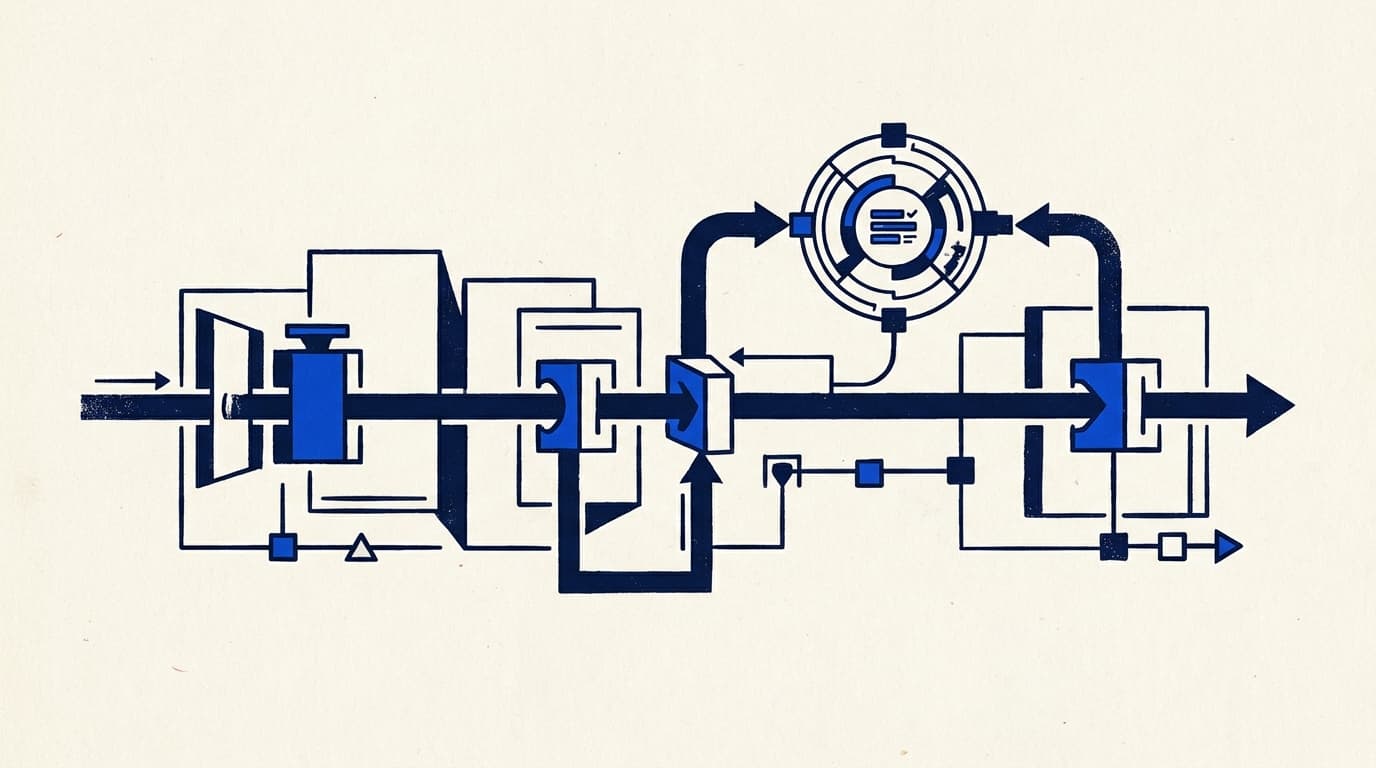
most vendors selling healthcare automation want to put language models into clinical notes and exam rooms. that is precisely where the regulatory exposure is highest and the liability is impossible to isolate. if a model summarizes a clinical encounter wrong, or nudges a diagnosis, there is no clean way to say the software did not make a medical decision. it did. the sensible place to put automation is the operational back office: intake routing, document categorization, schedule reconciliation. work where a deterministic check can govern every single step, and where the model never touches the thing that actually matters.
this is not a smaller ambition. it is a more honest one.
the exam room is a trap for autonomous tools
clinical automation sounds impressive in a sales deck. a model that listens to a visit and drafts the note. a model that flags a likely diagnosis. the problem is drift. a language model's behavior shifts in small ways between versions, between prompts, between an ordinary tuesday and a day its provider pushed a quiet update. in a clinical context, drift is not a UX annoyance. it is the thing a plaintiff's attorney asks about in a deposition, and there is no version-controlled answer because the model itself cannot explain why it phrased something one way instead of another.
the back office has none of that exposure and all of the waste. intake forms that need to be read and routed to the right queue. referral documents that arrive as pdfs and need to be filed against the right patient record. schedules that need to be reconciled against a dozen provider calendars. none of this is clinical judgment. all of it eats administrative hours, and almost none of it has to touch a model's output directly, because the model's job is to read and extract, not to decide.
the split between reading text and deciding what happens next
hipaa compliant workflow automation works when the system is built around one separation: the model parses, a deterministic function decides. a language model reads an incoming document and extracts fields: patient identifier, document type, referring provider, date. that is a parsing task, and parsing tasks are probabilistic by nature, which is fine, because nothing happens automatically just because the model produced an extraction.
what happens next is a hardcoded function. if document type equals referral and provider match equals exact, route to queue A. if provider match is ambiguous, route to a human. the model never updates a record, never sends a message, never closes a task. it hands structured output to code that no model touches, and that code is the only thing with write access to anything that matters. a function like that can be read start to finish by a compliance officer who has never touched a line of python, because the logic is just conditions, not a black box making a judgment call.
this is the same pattern i use building intake automation for law firms watching their ad spend: a model reads a search term or a document, sorts it into a bucket, and a separate, auditable step decides what actually gets applied. the model is never the one with its hand on the lever.
why commercial black-box wrappers fail an audit
most off-the-shelf healthcare ai suites do not expose this split, because exposing it would mean admitting how much of the pipeline is just a prompt and a hope. the vendor's dashboard shows you an outcome: a routed document, a scheduled appointment, a flagged record. what it does not show you is whether a probabilistic guess fed directly into a state change, or whether there was a deterministic gate in between.
that matters at the exact moment it is supposed to matter least: during an audit. if a record was misfiled or a patient's data was routed to the wrong queue, the firm needs to point to the specific step that made the decision and show what rule it followed. "the model decided" is not an answer a compliance officer can defend. and most commercial suites run on infrastructure the vendor controls, so the firm cannot even inspect the intermediate steps. there is no business associate agreement that makes a black box legible. it just makes the opacity contractual.
[[FIGURE:1]]
how a staged back-office intake loop actually runs
the build i trust looks like this. incoming documents or intake submissions land in the client's own storage, under their own cloud account, never mine. a model reads each item and produces structured output: type, parties, confidence. that output is staged, not applied. nothing updates a live record automatically.
a deterministic function then checks the staged output against existing records before anything is written. this is a conflict check, the same discipline i use when staging negative keywords for ad accounts: compare every proposed change against the current state before committing anything, so an automated step can never silently overwrite or misfile something that was already correct. only after that check passes does the system commit, and every commit is logged with what changed and why, in the client's own systems, so leaving the vendor relationship later is a handover, not a hostage negotiation.
low-confidence extractions do not get force-fit into a bucket. they get queued for a person, with the model's draft attached as a starting point, not a final answer. a human still signs off on anything touching patient-identifying routing decisions above a set confidence threshold. the review itself is a tracked task, not an email that quietly stops getting sent, because an audit trail that depends on someone remembering to check a dashboard is not an audit trail.
degrading to human staff when confidence falters
the clause that matters most is what happens when the model is wrong, slow, or simply unavailable. a system like this should fail toward a person, not toward a guess. if an api is down, or the extraction confidence falls below the threshold, the document does not sit untouched and it does not get auto-routed on a shrug. it drops into a queue a staff member checks, with context attached, and the work still gets done, just by a human instead of a model.
this is the opposite of what most automation vendors optimize for. they want higher autonomy, fewer humans in the loop, because that is the metric that makes the sales deck look good. for regulated back-office work, the better metric is the opposite: how gracefully does this degrade when the model cannot be trusted this one time. a system that never guesses is more valuable than a system that is impressively autonomous until the week it is catastrophically wrong.
none of this tells a practice what its own HIPAA obligations are, and advertising rules, record-keeping requirements and business associate agreement terms vary by state and by vendor, so that determination belongs to the practice's own counsel. what i can build is the mechanism: a model that reads, a function that decides, and a human gate that catches what falls outside both.
if your back office is already absorbing the cost of manual intake, document sorting, or schedule reconciliation, the place to start is mapping which of those steps are actually probabilistic reading tasks and which are decisions that need to stay deterministic. the Workflow Audit is a two-week, $2,500 engagement built for exactly that scoping work, and it is credited toward a build if you move forward.