
letter of protection: how a practice tracks one until it pays
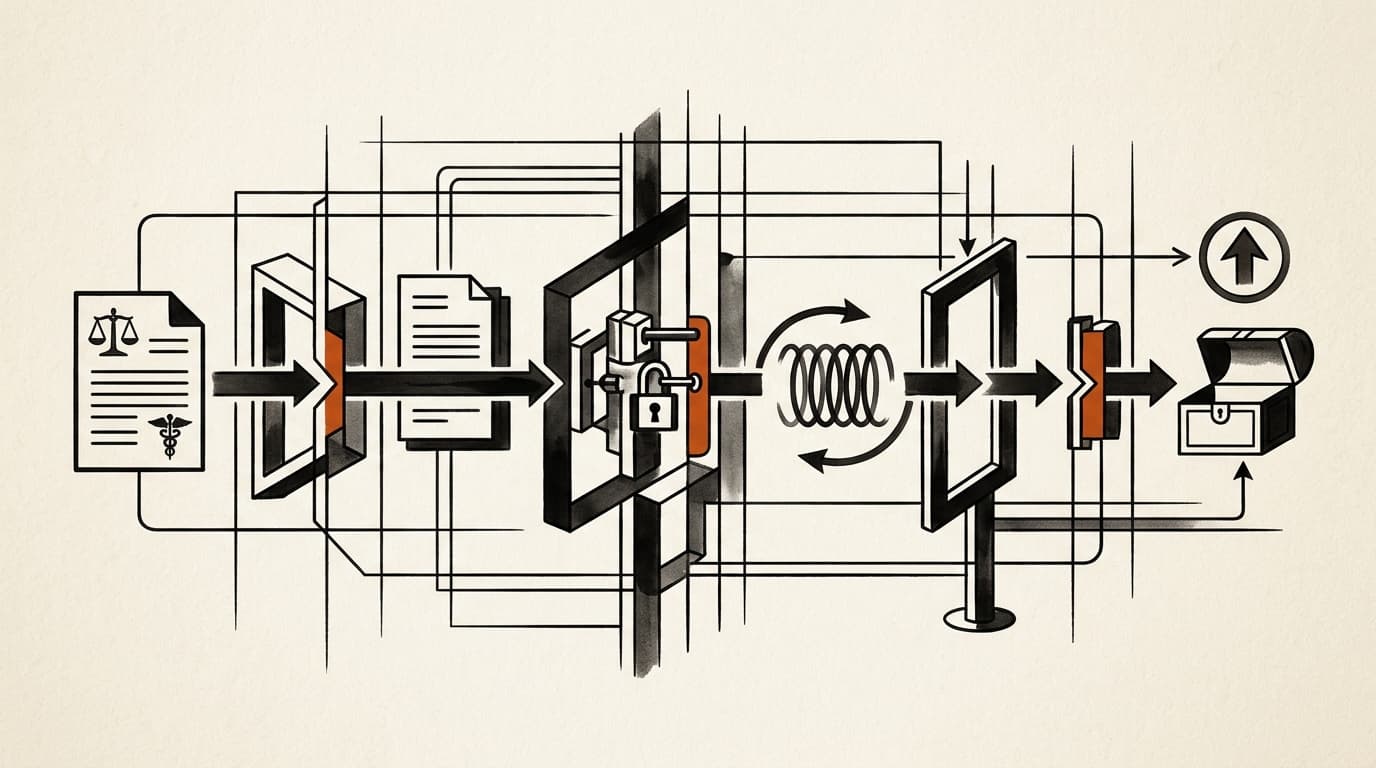
your billing desk signed off on treatment under a letter of protection eighteen months ago. today the file is sitting in an accounts-receivable aging report with zero notes and no settlement date in sight. nobody remembers the last time anyone called the attorney's office. the balance is real, the case might still be alive, and you have no way to tell the difference between a file that is quietly progressing and one that got dropped by everyone, including you.
a letter of protection is a promise, not a payment. the practice treats now, the attorney promises to pay from the proceeds of a settlement or verdict later, and the gap between those two events can run years. most practices track that gap with memory and a folder. memory does not scale past a handful of open liens, and a folder does not tell you when a case has gone cold.
what follows is the method, step by step. it is not legal advice, and lien enforceability, interest terms, and attorney obligations vary by state. what i can describe is the operational structure that keeps a file from decaying in silence.
the prerequisite: what must be logged before treatment begins
before the first appointment under a letter of protection, five things need to be on file, not in someone's inbox: the signed letter itself, the attorney's direct contact and firm name, the lien terms including any interest or reduction language, the defendant's liability policy limits if known, and confirmation that the firm issuing the letter is who it says it is. that last one matters more than it sounds. a letter on firm letterhead is not proof the firm exists or that the signer has authority to bind it. a quick bar-registration check before treatment begins is cheaper than finding out after.
this is the baseline record. everything downstream, every follow-up, every reconciliation, points back to this intake. if it is incomplete, every later step inherits that gap.
step 1: log the signed lien and freeze the balance outside regular collections
the balance under a letter of protection should never sit in the same bucket as a patient's regular self-pay account. if it does, a standard aging-report rule will eventually flag it for collections, and a collections call to a letter-of-protection patient is the fastest way to damage a referral relationship with the firm that sent them.
in the practice management system, this means a separate account classification: lien-pending, not past-due. the balance is frozen from automated dunning, but it is not invisible. it still shows on the ledger, it still ages, and it still needs an owner. the distinction is between "we are not chasing this the normal way" and "we have forgotten about it," and those need to look different on the screen to the person running the aging report.
step 2: extract case milestones from attorney correspondence into structured dates
attorney correspondence on a liability case arrives as pdfs: demand letters, filing notices, discovery schedules, sometimes a settlement conference date buried in paragraph four of a cover letter. the instinct is to drop the pdf into the patient's chart and move on. that is where dates go to die, because nobody reopens a pdf to check for a deadline.
the fix is extraction, not storage. every letter that references a case event gets read for specific fields: demand sent date, filing date, discovery deadline, mediation or trial date if set. those go into structured fields tied to the lien record, not loose text. a model can read the letter and pull the dates. it should not decide what those dates mean for your collections posture. that decision, whether a case nine months past its demand date gets escalated, is a rule a human sets and a deterministic check applies every time, the same way, with no judgment call buried inside a language model.
step 3: stage a sixty-day status inquiry loop with a human gate
every open lien gets a standing check-in cadence: a status inquiry to the attorney's office every sixty days if no milestone has moved. the inquiry is short. it asks one question: has there been a change in status since the last update.
the mechanism that matters is not the email, it is the gate in front of it. the system should draft the inquiry and queue it for review, not fire it automatically. an automated email that goes out on schedule regardless of context reads as nagging, and a firm you nag stops returning calls. a drafted email that a staff member reviews, edits if needed, and sends keeps the relationship intact while guaranteeing the follow-up actually happens instead of depending on someone remembering to do it.
[[FIGURE:1]]
the same cadence applies if the model that drafts the inquiry is down for whatever reason. the check-in still goes out, just handwritten that week. the sixty-day clock does not stop because a tool is unavailable. it degrades to a person, not to silence.
step 4: verify policy limits and settlement offers prior to lien reduction negotiations
when a case nears settlement, the attorney's office will often ask for a lien reduction, arguing that the full bill does not fit within what the case actually recovered. before any reduction conversation happens, two numbers need independent verification: the defendant's liability policy limits, and the actual settlement or verdict figure, not a round number relayed verbally.
verbal confirmation from a paralegal is not a record. a reduction request should come with documentation, a copy of the settlement statement or at minimum written confirmation of the recovery amount, before the practice agrees to anything. the math only makes sense once both numbers are on paper: what the case actually recovered, what other liens are competing for the same pool of money, and what that leaves for the medical balance. negotiating a reduction against a number nobody has verified is negotiating against a guess.
step 5: reconcile the disbursement sheet against the original ledger before sign-off
when the settlement closes, the attorney's office sends a disbursement sheet, sometimes called a closing statement, showing how the proceeds were split: attorney fees, case costs, other liens, and the medical payment. this is the last checkpoint, and it is the one most often rubber-stamped because everyone is relieved the case finally closed.
before sign-off, the disbursement sheet gets checked line by line against the original ledger: the billed charges, any agreed reduction, and the check amount actually being issued. these three numbers should match exactly. a mismatch at this stage, a check short by a few hundred dollars because of a rounding error or an unagreed deduction, is far easier to catch here than after the check has cleared and the file is closed.
four ways practices bungle letter of protection tracking
the first failure is trusting a paralegal's verbal status update as if it were documentation. verbal updates evaporate. if it is not written down with a date attached, it did not happen for tracking purposes.
the second is letting follow-ups lapse past a statute-of-limitations milestone. a case that misses its filing deadline is not just delayed, it may be dead, and a lien against a dead case is a write-off nobody flagged in time.
the third is allowing an attorney's office to close a file and disburse funds without the practice's lien being cleared first. once the money is distributed and the file is closed, collecting what is owed becomes a much harder conversation than it needed to be.
the fourth is accepting a reduction without having verified the underlying settlement figure. a reduction that looks reasonable against a number nobody checked is not a negotiated outcome, it is a guess the practice absorbed.
replace guesswork with an auditable tracking pipeline
none of this requires exotic technology. it requires a structure where document extraction and payment-status decisions are separate functions, so a model reading a pdf for dates is never the same thing deciding whether a balance gets escalated. every step leaves a dated record: the intake, the extracted milestone, the staged inquiry, the verified settlement figure, the reconciled disbursement. a file that decays in silence is a file where that chain had a gap somewhere, and the gap is always findable once you go looking.
if your practice is carrying open letters of protection right now and nobody could tell you, off the top of their head, which ones have gone sixty days without a documented update, that is the first thing worth fixing. the Workflow Audit is a two-week, fixed-scope review that maps exactly where a tracking loop like this would plug into your existing systems, for $2,500 credited toward a build if you move forward.