
patient intake: what to automate, and the one step you can't
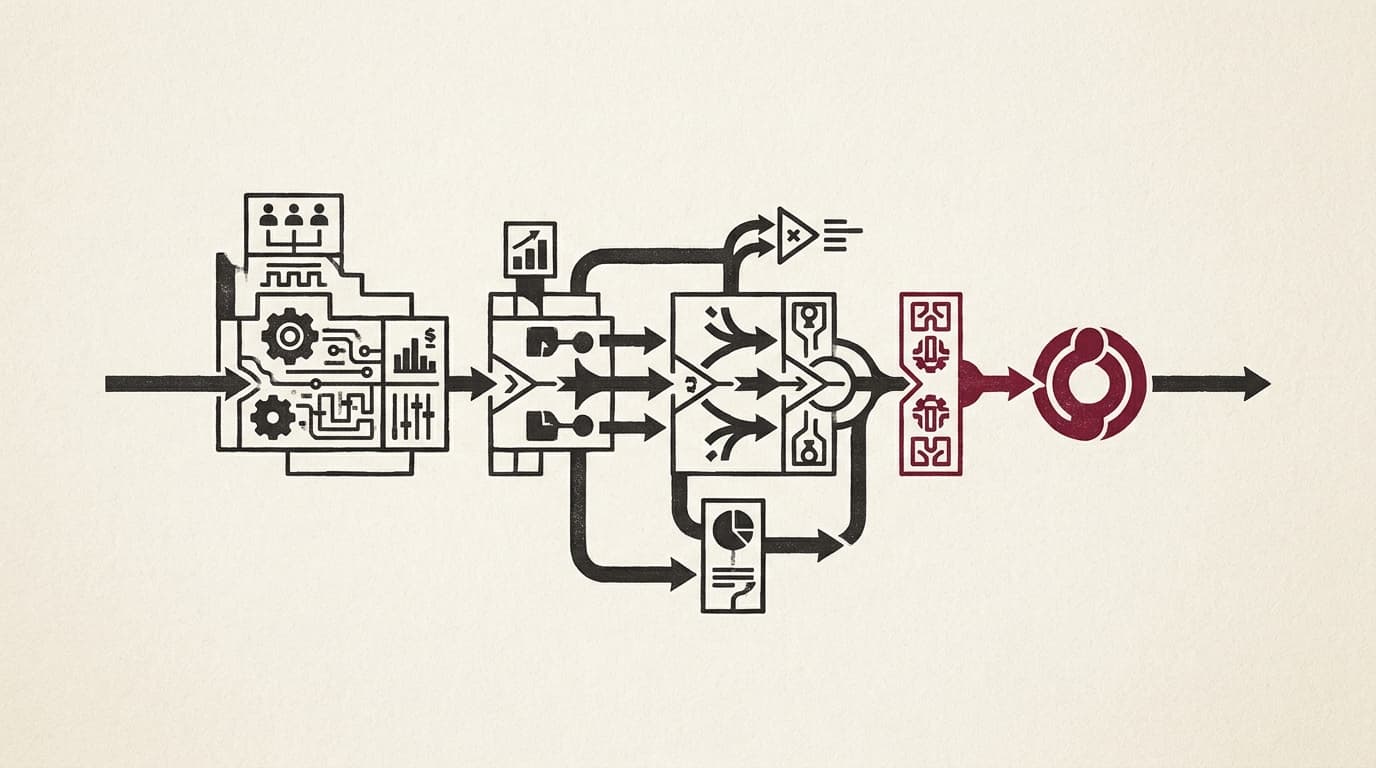
most patient intake management software is sold on a promise it shouldn't make: give it a new patient, and it will carry that patient from form fill to clinical routing without anyone touching it in between. that pitch is the problem. the moment a model decides where a patient goes in your clinical workflow, you've handed a liability-bearing decision to a system that cannot be held accountable for it, and that cannot explain itself in the way a chart review can.
i don't build that. i build the parts around it: the extraction, the validation, the staging. the routing decision stays with deterministic rules and a human who signs off. here is what that split actually looks like, step by step.
what is patient intake, actually
patient intake gets flattened into "the new patient form" in most people's heads, but that's one piece of it. the real process is: collect identity and insurance information, pull in history from wherever it lives (a referring provider's pdf, a scanned fax, a patient portal, a handwritten form), reconcile that history against what's already in the chart, flag anything that needs clinical attention before the first visit, and then route the patient to the right provider, the right appointment length, or the right next step.
three of those four are administrative and extractive. one of them, routing based on clinical significance, is a judgment call. patient intake management software that blurs those four into a single automated pipeline is treating a judgment call like a data entry task.
the hard line between extraction and decision
here's the boundary i build to, and it doesn't move: a model reads. it does not decide.
a model can read a referral letter and pull out the medication list, the allergy history, the reason for referral. that's pattern matching against unstructured text, and it's genuinely good at it. what it should never do is look at that medication list and decide the patient needs an urgent slot instead of a routine one. that's a clinical judgment, and clinical judgments need to be made by rules a practice has written down and signed off on, or by a person licensed to make them. not by a model guessing at what's probably true.
the reason this split matters isn't philosophical. it's that a deterministic rule can be audited line by line. you can open the code and see exactly why a patient was flagged. you can't open a model's weights and get the same answer. if a regulator, a malpractice attorney, or your own compliance officer asks why a patient was routed somewhere, "the model decided" is not an answer anyone wants to give under oath.
step 1: ingest unstructured history into a standard schema
the first job is reading the mess: pdfs from referring offices, scanned handwriting, portal submissions in whatever format the patient typed them in. the model's job here is narrow. it extracts named fields, name, date of birth, current medications, reported allergies, reason for visit, into a fixed schema.
the discipline that matters: if a field isn't found, it stays blank. it does not get filled with a plausible guess. a model that infers a missing allergy field because the rest of the record "suggests" one is a model making a clinical call it has no business making. blank fields get flagged for a human to fill, not papered over.
step 2: run deterministic validation against clinical thresholds
once the data is in the schema, it passes through rules a practice has written and owns, not a model's inference. these are hard-coded checks: does a reported blood pressure value fall outside a defined range, does a medication on the list appear on a flagged interaction list, is a reported symptom on a list that requires same-day review.
this is ordinary business logic, the kind that's been in software for decades. it's deterministic: same input, same output, every time, and it's checkable by anyone who reads the rule. nothing probabilistic touches this step. the model's extraction feeds it. the rule decides what happens next.
step 3: stage records in a review queue, don't commit to the ehr
even after extraction and validation pass clean, nothing writes directly into the live ehr. it lands in a staging queue first, a dry run, the same pattern i use anywhere a decision could cause real damage if it's wrong. a staff member reviews the staged record, confirms it against the source document, and approves the commit. only then does it land in the system of record.
this step exists because confidence scores on an extraction are not the same thing as correctness. a model can be highly confident about something that's slightly wrong, a transposed date, a misread medication name, and the cost of that error landing uncaught in a live chart is much higher than the cost of a staff member spending thirty seconds confirming it.
[[FIGURE:1]]
step 4: fail open to a human on anything ambiguous
what happens when the extraction model hits a record it can't parse cleanly, or two source documents disagree with each other, one referral letter lists a medication the portal intake doesn't mention? the system doesn't average the two and move on, and it doesn't pick the one that seems more likely. it stops, flags the conflict, and routes the record to a person.
this is the same principle i use everywhere a model sits inside regulated work: when the model is unsure, or when the model itself is unavailable, the system degrades to a human. it never guesses, and it never drops the work silently. a dropped intake record is a patient who thinks they're on your schedule and isn't. an ambiguous record that gets silently resolved by a model's best guess is worse.
where practices get this wrong: autonomous triage and quiet drift
the two failure patterns i see most often in intake automation aren't exotic. the first is letting the model itself prioritize acuity, deciding who needs to be seen sooner. that's the exact decision that belongs in step 2's deterministic rules, made visible and auditable, not buried in a model's output.
the second is vendor lock-in that hides what's actually happening. if your intake pipeline runs inside a vendor's infrastructure and you can't see the rule that triggered a flag, or the prompt that drove an extraction, you have no way to audit it when something goes wrong, and no way to leave without losing your own records. infrastructure should sit in the practice's own accounts. leaving a vendor should be a handover, not a hostage negotiation. if a vendor updates their model or their prompts without telling you, and your flag rates shift as a result, you won't know why until a patient falls through a gap you can't see.
how to audit your own pipeline before you deploy it
ask your current or prospective intake vendor three questions. where exactly does extraction stop and decision-making start, and can you point to the line? can a staff member see every staged record before it commits to the ehr, or does it write automatically? and when the model can't parse something, what happens, does it flag a human, or does it guess and move on?
if the answers are vague, that's the signal. a system built on the extraction and decision split should have clear answers to all three, because the whole point of the split is that it's inspectable.
if you want a second pair of eyes on where your current intake stack draws that line, that's exactly what the Workflow Audit is for: two weeks, $2,500, credited toward a build if you move forward, and it maps where your intake process actually hands off from automation to judgment, and whether that handoff is where you think it is.